


He-He-Laa-Laa, Mö-Mö, Moos-Moos (Money, Money), Brumm-Brumm, Miau-Miau, Prost-Prost, Göd-Aus (which means no money), Mai-Mai Sau Sau (May Pig or My Pig). So, who among you has ever heard such funny carnival chants? I must admit, for some of them, I would have thought someone was just imitating their refrigerator.
In Lower Austria, the carnival calls are as diverse as the selection in an ice cream shop. But it’s not just here; it goes across Austria and large parts of Germany. Even in East Belgium and the Netherlands, people shout enthusiastically, although mostly uniformly. Carnival is really like an international mood boost (although „international“ should be taken with caution, as there is no carnival country map to date), and this is despite everyone having their own „Hee-Haa.“
Switzerland also participates, but they spell „Fasnacht“ like „Vasnacht“ from 1000 years ago. Well, they have had peace for 800 years, so why should anything change in that regard? The interesting thing is that in Switzerland, carnival starts after our Ash Wednesday – the end of carnival – as if it were a delayed carnival upgrade. Upgrade fits perfectly with Switzerland. Ash Wednesday also marks the start of the Carnival in Rio, when everything is already over here. But then it really kicks off – with samba schools and all the trimmings.
For anyone who has been to America, it’s clear that there is no carnival; they are carnival-less. As a small consolation, there is limited regional Mardi Gras (Fat Tuesday) on Carnival Tuesday, just like in Austria, the day before Ash Wednesday. It’s safe to assume that carnival was imported by the Catholics there, and the French enriched the festivities with the „Boeuf Gras“ (Fat Ox). However, I have never seen a decorated fat ox marking the end of carnival here, colloquially speaking, of course. „Fat“ can also mean „drunk“ in Austria, and „Ox“ is a common term of endearment in the Vienna region.
In Cape Town, they do it differently. They may not have a carnival call, but they wear colorful costumes at the Cape Town Minstrel Carnival. No masks, just good vibes – almost a bit like Mardi Gras, right? And in the Caribbean, each island celebrates its own carnival party.
And then we have the Rhine villages of Cologne and Basel, which really dive into the carnival frenzy. But you know what? There is almost no carnival tourism! Hard to believe, right? Maybe we should organize some carnival trips so that people can see what they are missing. In any case, one should book the Imster Schemenlauf, which does not happen every year and is the most mysterious of all the carnival parties I know.
I had the opportunity to experience the Basel Fasnacht twice – insider knowledge, folks! And I was even invited to the Barbara-Clique, one of the oldest carnival cliques in Basel. You can imagine how cool that is! Here are some fotos on Pinterest.
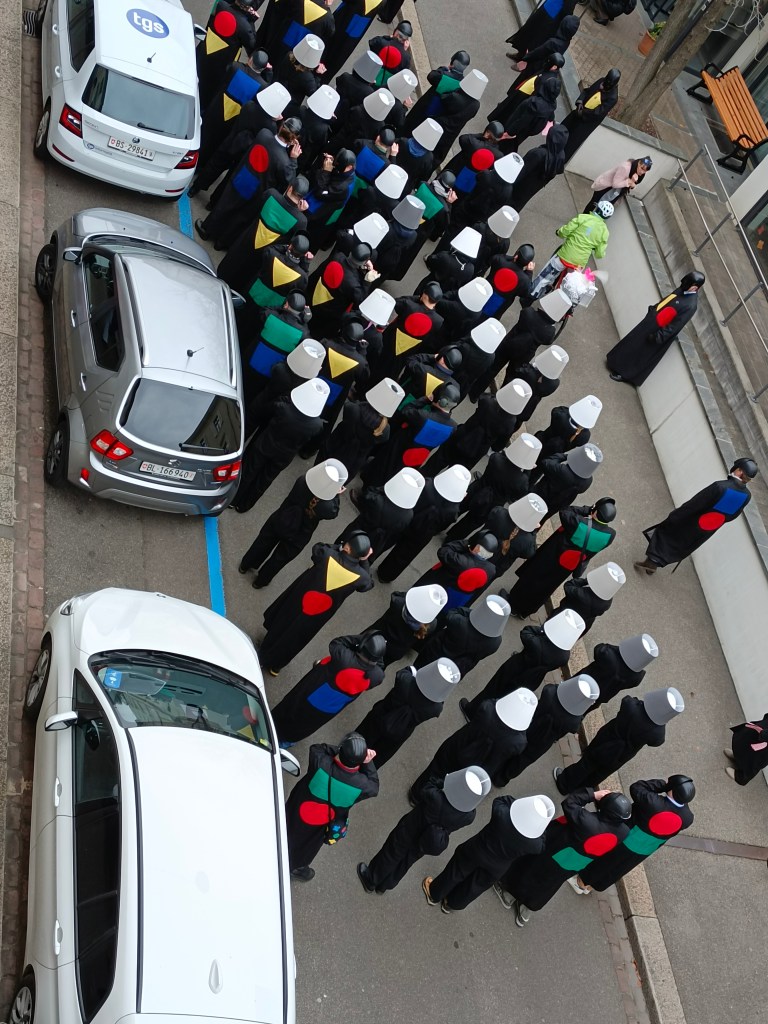
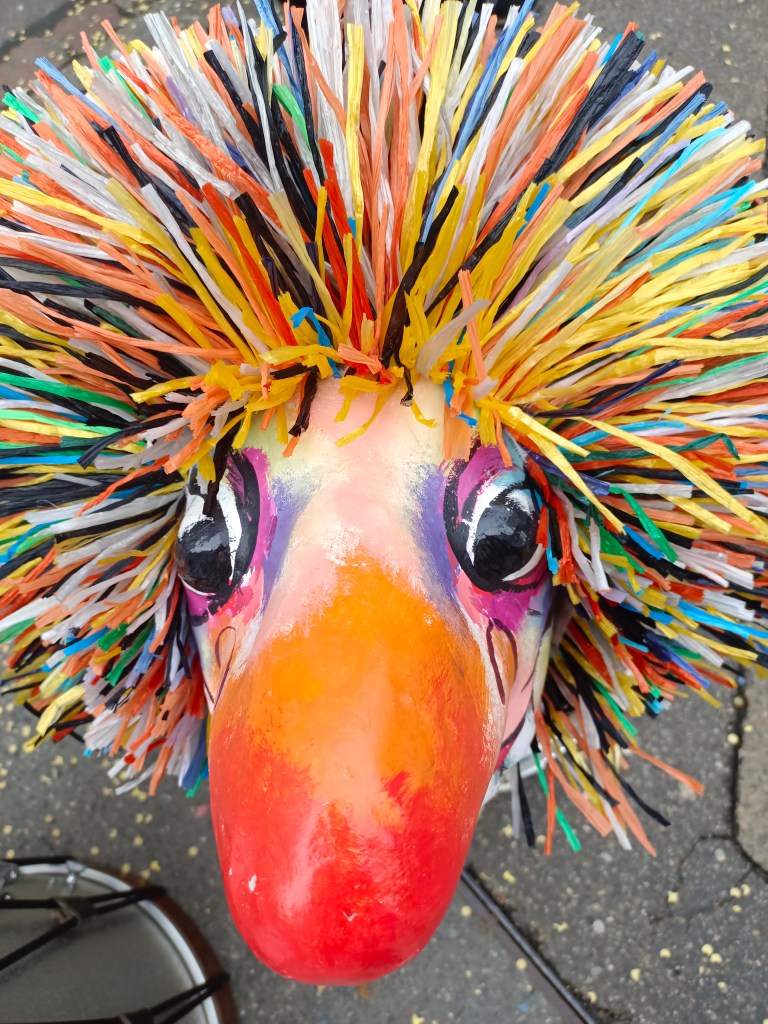
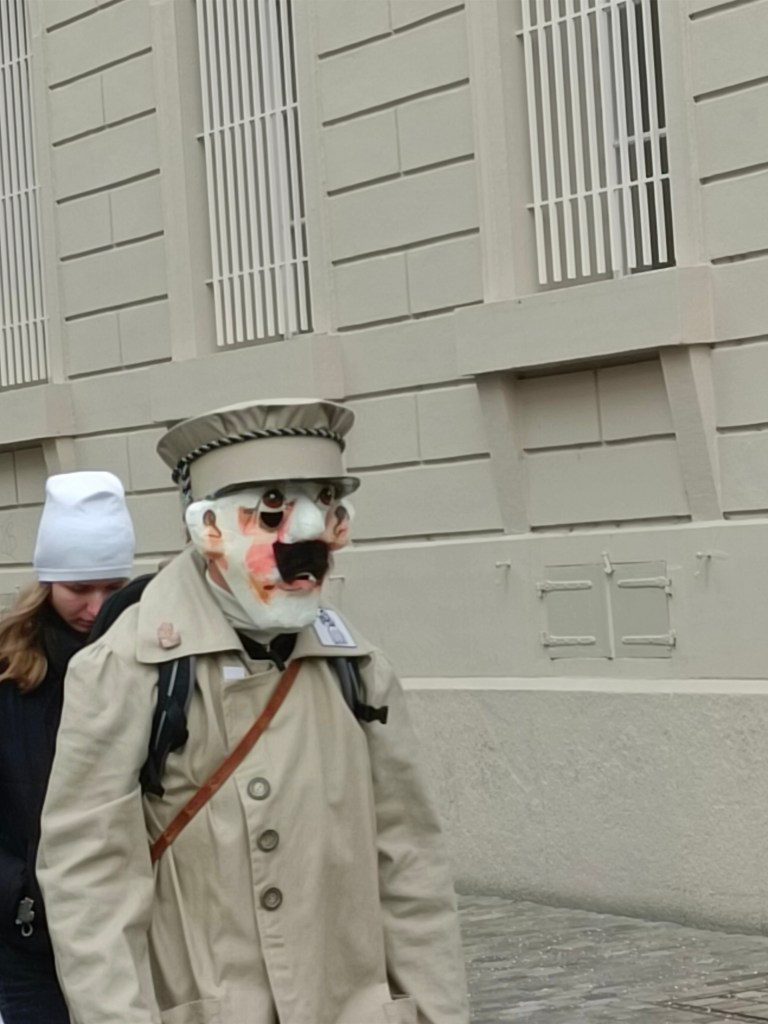

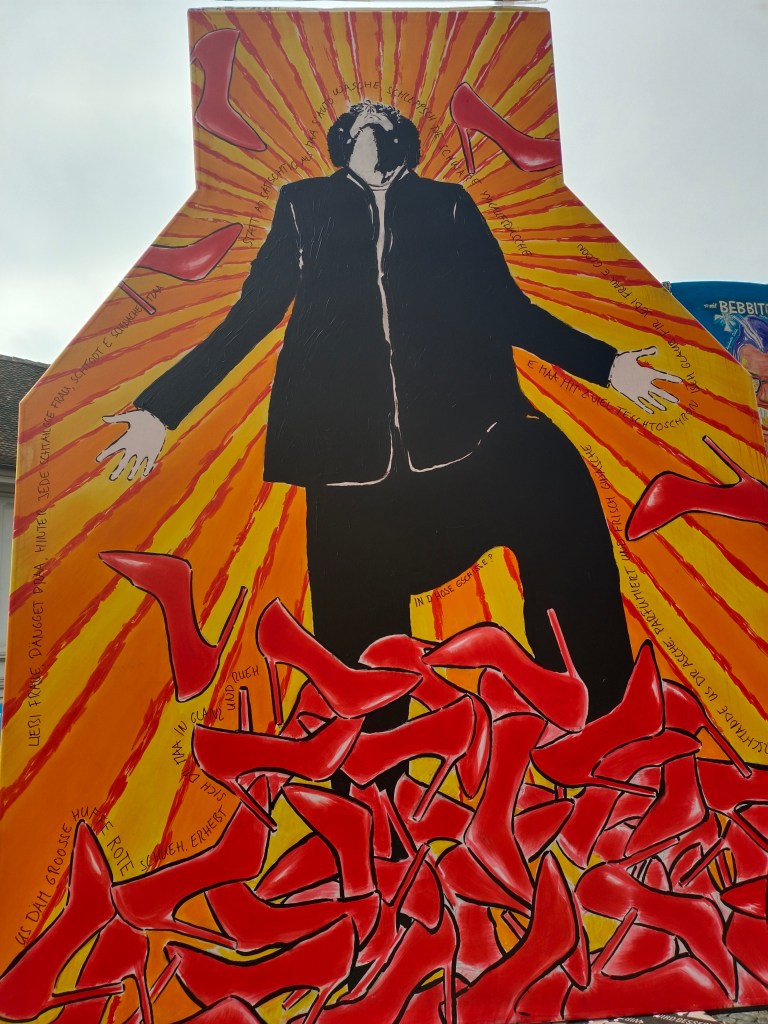


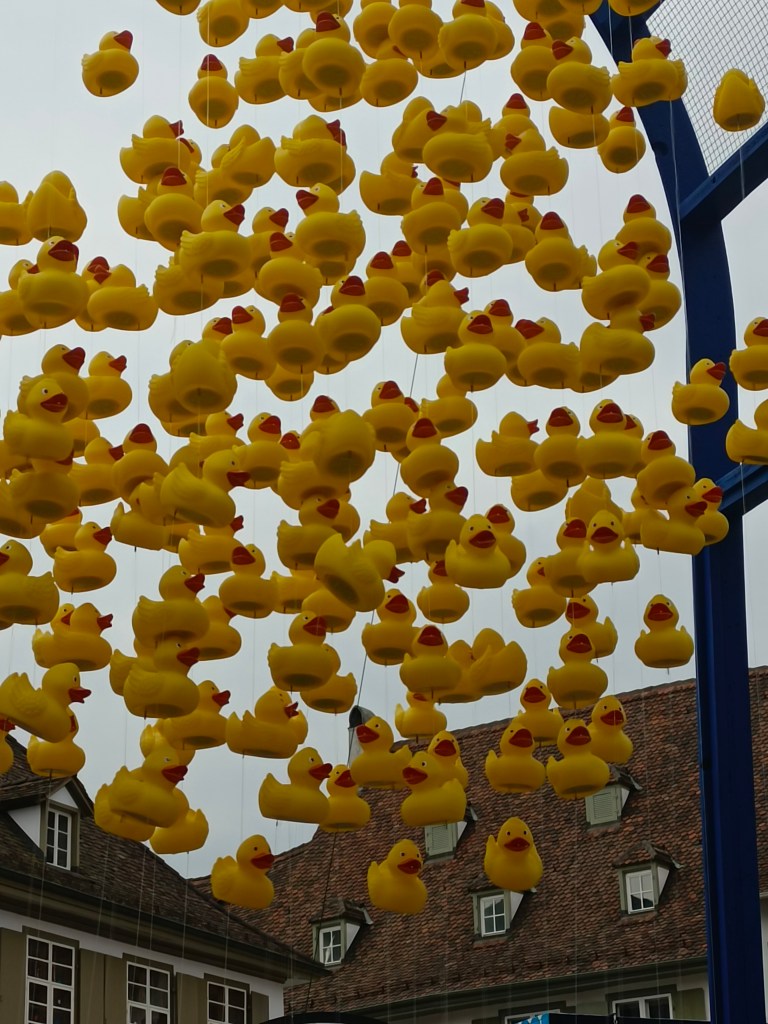


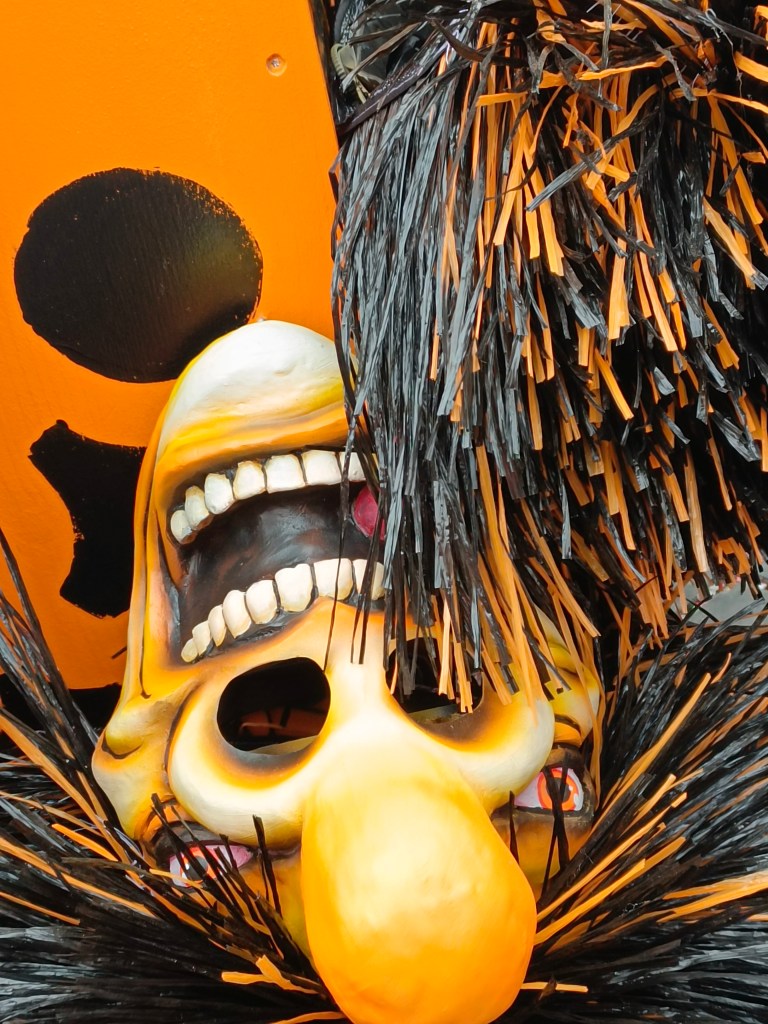
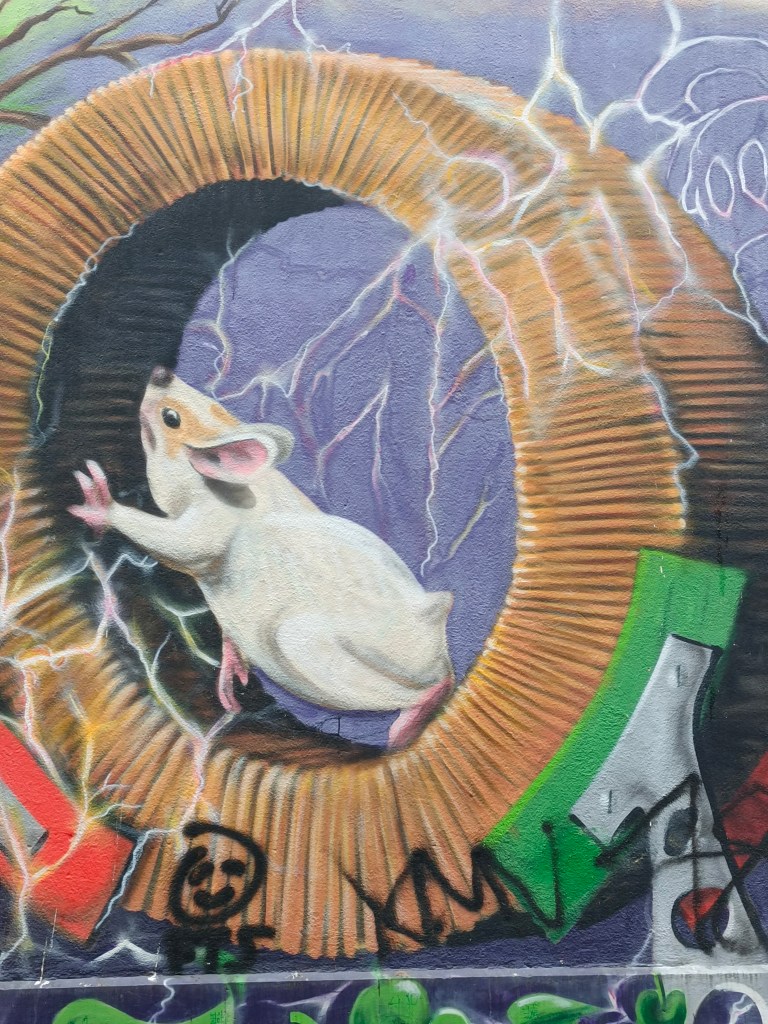
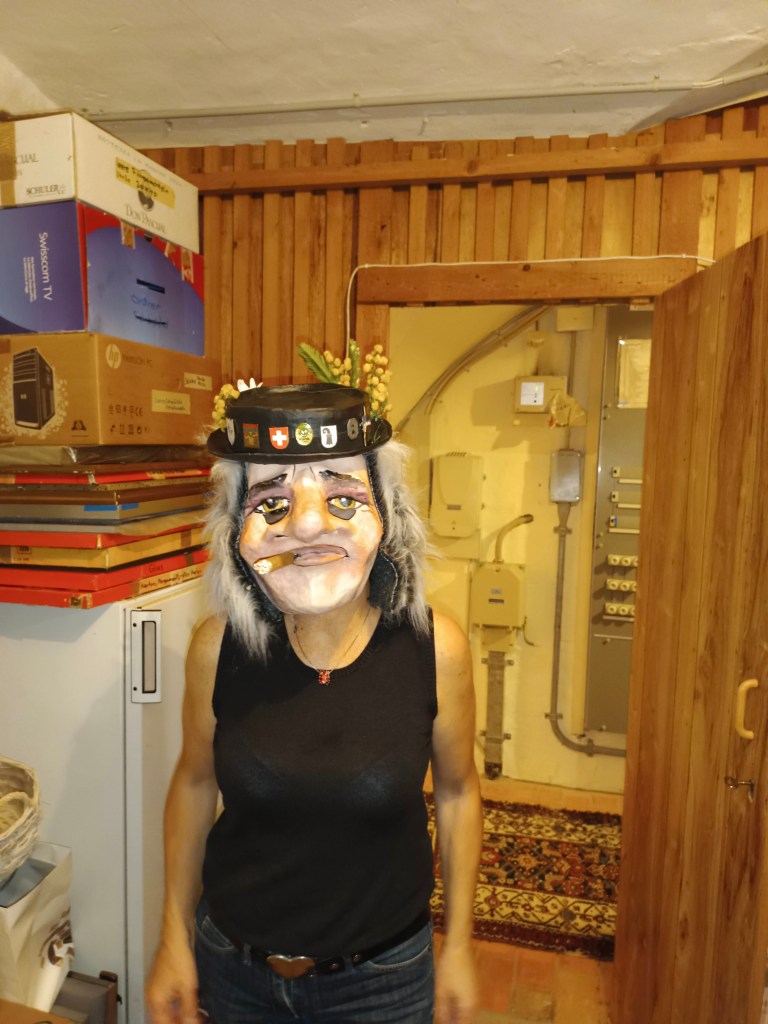
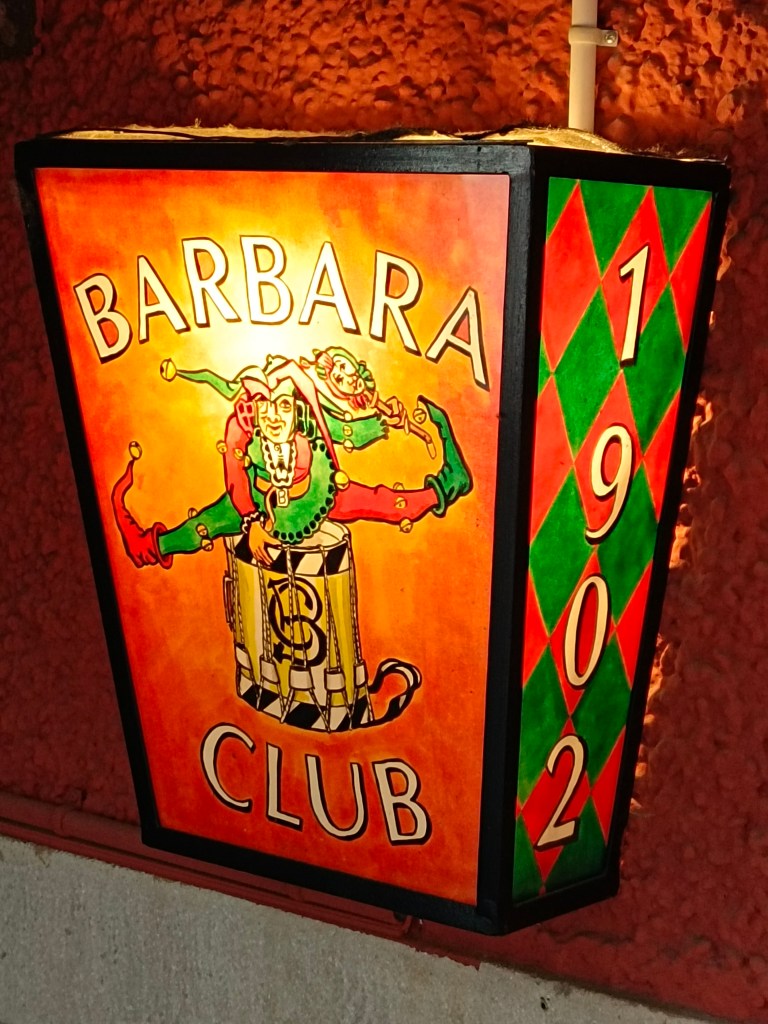
But wait, in my hometown Baden, the jesters have no carnival call. They are probably more subdued by wine and sulfur fumes. I can already imagine how they would sound: „Gluck-Gluck, Sprudel-Sprudel.“ Okay, that doesn’t sound so funny, but hey, every place has its own carnival vibe.
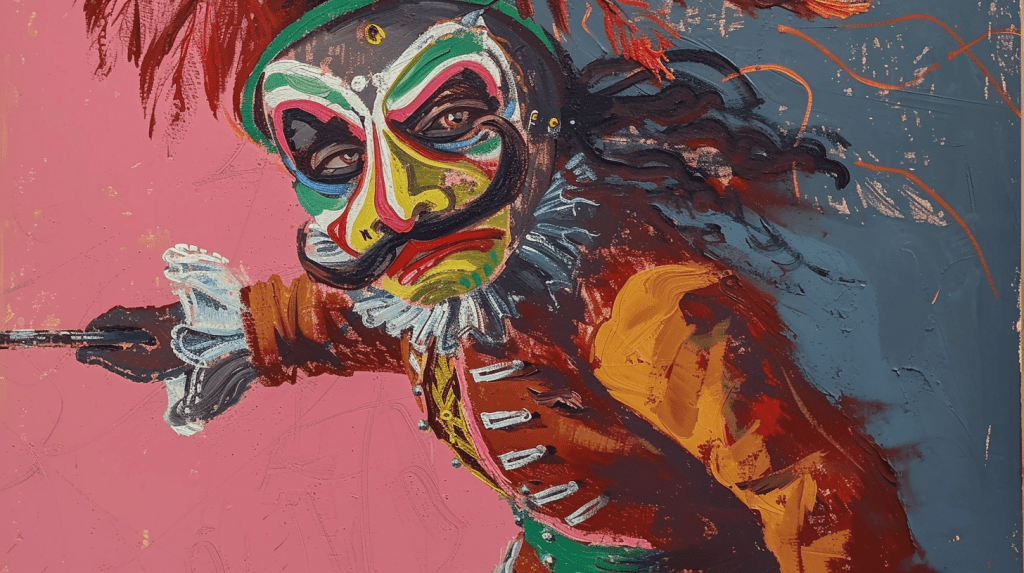
Speaking of vibes, my grandfather was an artist – on the side, of course. His artistic legacy has been waiting to be discovered for what feels like 100 years. I have used some of his paintings for my own purposes, but now, thanks to Midjourney, his work is getting a truly modern makeover (still unsigned for now, but thankfully the originals are signed and dated). I will also start painting again, don’t worry. However, I have no reservations about exploring new digital possibilities. Here is an original tile.

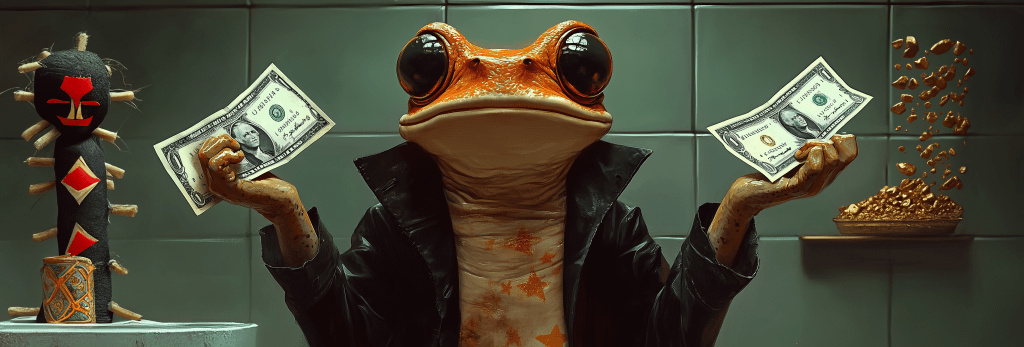
And the guiding image of this article is a self-prompt in Midjourney (as is the one in the German version of this article). I find it interpreted brilliantly. Well, the lack of the syringe is my fault. But how do you explain to a bot a metallic syringe used to wake people up with water? Not to the heart (although some could use it), but to the shoes – just as a carnival wake-up call!
In Eastern Austria, that seems to have gone out of fashion, so there are so many sleepers here. The genetic predisposition seems to be messed up. The poor ones have been awakened during carnival for hundreds of years, and now they don’t even know why they like to party so much. They are genetically searching for the wake-up call, and no authorized person wakes them up. Others, on the other hand, have been permanently awake, forever wide awake, which is surely exhausting.
I also have a few cute tiles with Perchtenlauf motifs from Imst from 1949 (also with Austrian traditional costume motifs, similar to the Almdudler couple, but the are younger than my grandfather’s works. Sounds almost like a treasure, doesn’t it? My grandfather painted the motifs on slate, Eternit, or maybe even on a cardboard that no one knows today. He also made matching frames himself. He really thought of everything.
But honestly, is there a difference between Fas(t)nacht, Fasching, Carnival/Carneval, Schemenlauf, and Perchtenlauf? And why have I never heard of Altfränkischer Spritzer (Old Franconian Spritzer) and Kübele Maja in Lower Austria? I mean, I have painted tiles as evidence! Sometimes I really wonder what people were up to back then.
And why do some appear with Krampus and Nikolo (Krampus does his thing on December 5, Nikolo operates on December 6 and will forever remain a mystery to me, as he is the role model for Santa Claus. We don’t have Santa Claus in Austria; we have the Christkind. After all, the official carnival has already started (on November 11th). But wait, in southwest Germany, carnival starts on January 6th – as if they were on a different carnival planet.
In fact, in this area of science, 1000 years are nothing, and in this field science, nothing seems to have happened there for 1000 years (note: my ear is playing unprompted the song „A Thousand Times Nothing Happened“ in my head). Many celebrate this tradition without knowing (which seems to be the essence of any tradition). Around 1000 AD, January 6th was already referred to as „giperahta naht“ = luminous night – they must have celebrated as if there were no tomorrow. Ugly and beautiful Perchten (Masked), witches by day and witches by night – everything was there.
In Italy, La Befana flies in search of the baby Jesus and brings gifts on January 6th. But it’s not her fault that she was late! After all, the baby Jesus was born on December 24th, and when she got the news on January 6th (in Italy!), she immediately set off with her broom. Okay, she missed the star, but on January 6th, they still celebrate. Everything is a bit different in Italy. So, it’s right and proper that on January 6th, Befana and the Three Wise Men (Kings) are celebrated. The beginning of the Christmas celebration of the Orthodox Christians, also on January 6th, seems a bit vague to me; this seems to be due to their calendar, which shifts the day of Christ’s birth by 13 days. By the way, 13 is a lucky number in Italy, truly not so in other EU countries.
Speaking of different: one feels almost de-Austrianized in the face of the not insignificant lack of knowledge that is not addressed in schools either. Everyone is following a carnival parade (it remains mysterious to me who actually chooses the carnival princes and princesses and why the municipality doesn’t send me a voting card), and no one has a clue. Just like in politics, you might think. And those who should know, the scientists, argue about who is right or insist on their opinion, even though the one they oppose has long passed away. But the world wants to solve problems in Palestine, Ukraine, or elsewhere, even though they don’t know which mask they are wearing (or pretending to wear) or chasing after. Also, the question of mask law needs to be clarified. Can anyone wear a visible or invisible mask (exception to the ban on masking in Austria?), or does it require a vocation? This inevitably leads us to the question of „What do fraternities have to do with carnival?“ and, in connection with this, the question „Are all others (outside the fraternities) primitive people?“
No, the mask business needs more order. I tell you, the key – now with the jesters – lies in the prompt and orderly organization of the carnival business and information to the primitive people. In general, it is noticeable that problems are best solved without a mask (so they know which direction to go), and I observe an acute lack of authorized mask seers.
Almost forgot;) Please, meet Carnivale (2nd hierachy), the mischievous Prince of Powers! He’s all about tempting folks into a bit of naughty behavior, but fear not – John the Evangelist’s on the scene, ready to thwart his antics with a sprinkle of divine intervention. It’s a showdown of temptation versus virtue, with a side of humor and elegance thrown in for good measure!
Recommended further reading: If you want to find out how to wake up carnival sleepers in Eastern Austria, then
a) read „The Secret Art of Carnival Incantation“ – my unwritten masterpiece of carnival literature!
b) Eat fish and indulge in the love spell on February 14th (this year, simultaneously fish and roses on Ash Wednesday
c) https://diglib.uibk.ac.at/download/pdf/4421113?name=Brauchtum%20in%20Tirol%201938%201955 https://diglib.uibk.ac.at/download/pdf/1681862?name=Anhang https://www.fasnacht.at/Spritzer_1 (here’s a little mistake, the Spritzer doesn’t distribute pretzels, that’s the task of Scheller and Roller, which I also have as small pictures). https://www.researchgate.net/publication/324533139_Anton_Dorrer_und_die_Tiroler_Fastnacht_zwischen_Erfindung_und_Tradition_ca_1900_bis_1950
d) keep an eye out for the hares
e) don’t forget we are entering the year of the blue wooden dragon, and this year, especially many solar storms are expected. Focus, focus, focus, and no hocus-pocus. If there’s magic, then Abracadabra.
#Imster Schemenlauf #carnival #carneval #fasching #fastnacht #fasnacht


 2025
2025 
Hinterlasse einen Kommentar