


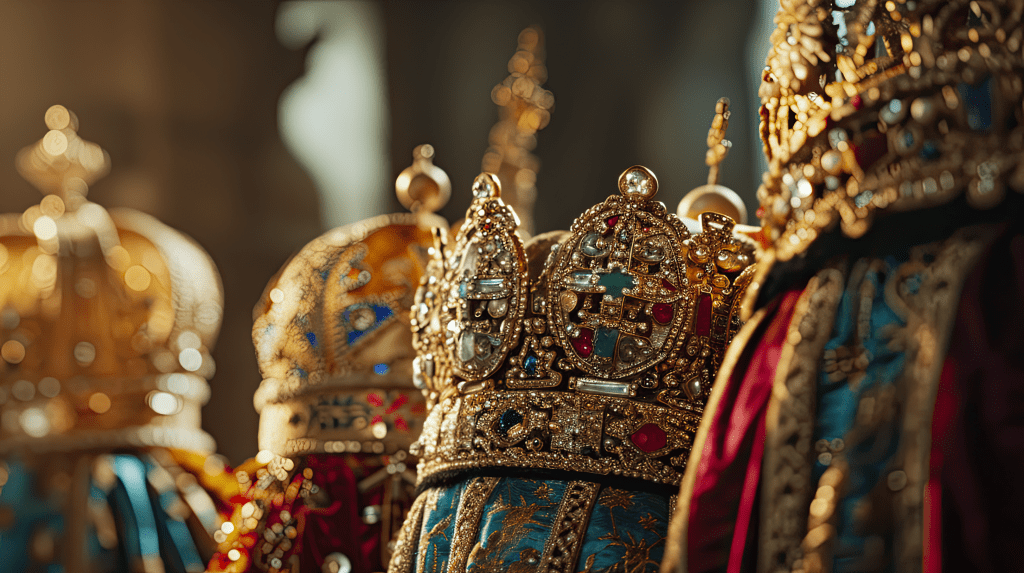
In the fascinating world of Dreikönigskuchen and Gallette des Rois, there is an amusing discrepancy between the represented number of kings and the actual quantity of majestic figures inside the delicious pastries. Why only one king when three kings are being celebrated? A profound, humorous analysis might suspect a secret conspiracy or even royal intrigues in this regard.
It seems as if bakers and pastry chefs in France and Switzerland have entered into a clandestine agreement to subtly but effectively promote monarchy. Perhaps they have decided that the bakery becomes too crowded when three majestic personalities simultaneously appear to populate the interior of the cake. An overly royal commotion could disrupt the delicate balance of the pastry arts.
The idea of unconscious manipulation could relate to the bakers‘ unconscious fears of royal chaos. Perhaps they fear that if all three kings were to appear simultaneously, with royal demands and royal drama, the bakery would turn into a veritable royal battlefield. Therefore, in a subtle gesture of self-defense, only one king is allowed into the cake to avoid any royal revolts.
And what about Austria, where there doesn’t seem to be a king in the cake at all? Here, a revolutionary idea of anti-monarchism might be at work. Austrian bakers may have opted against royal hierarchy, preferring not to include royal figures in their creations. This could be a sign of neutrality in the pastry land of Austria.
Overall, this humorous perspective shows that even in sweet treats, the king of Dreikönigskuchen is not always undisputed. Hopefully, these royal differences won’t diminish the joy of indulging in these traditional delights. Let us continue to enjoy the delights of royal bakery with a smile, even if there’s only one king in the Gallette des Rois!
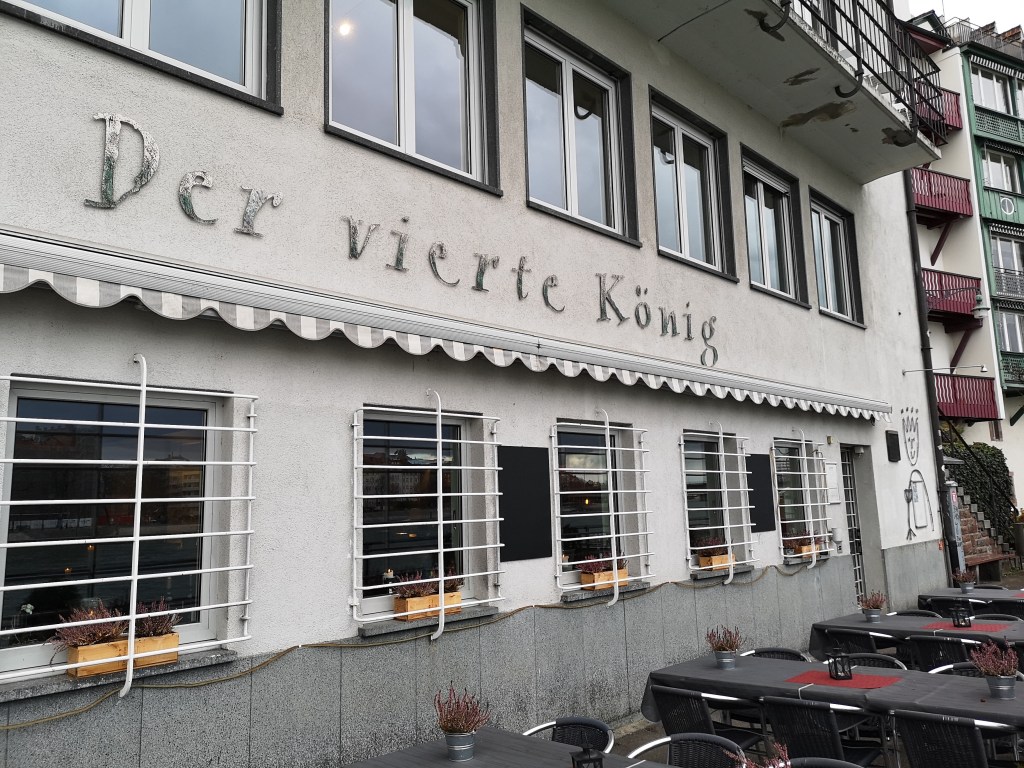
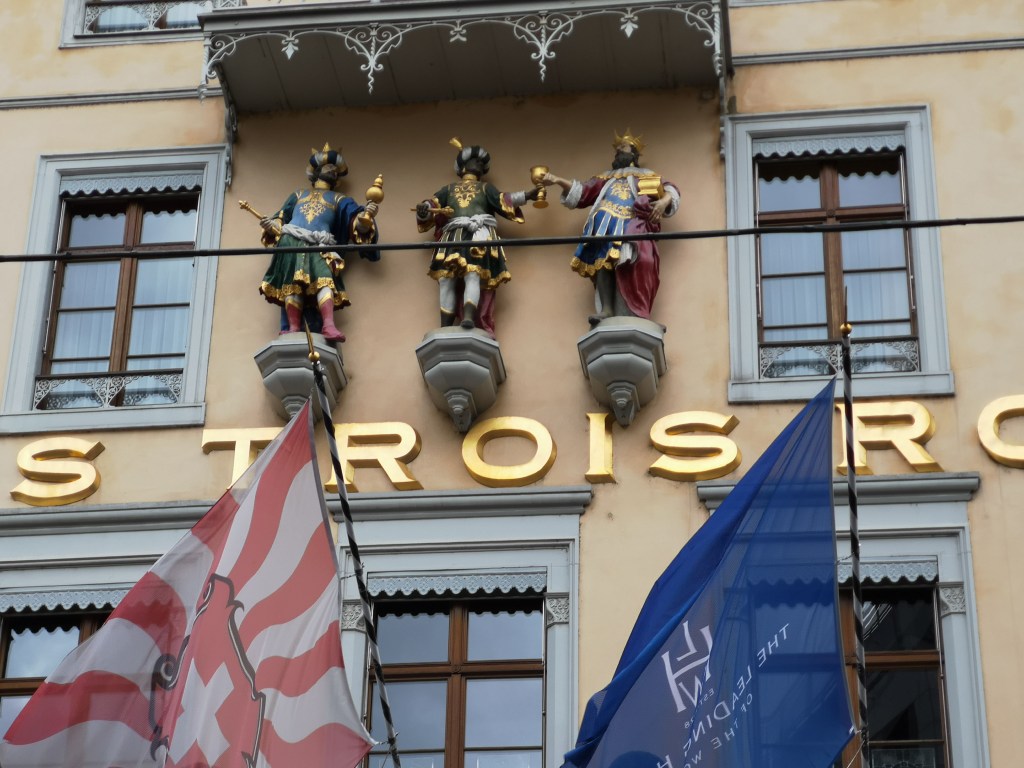
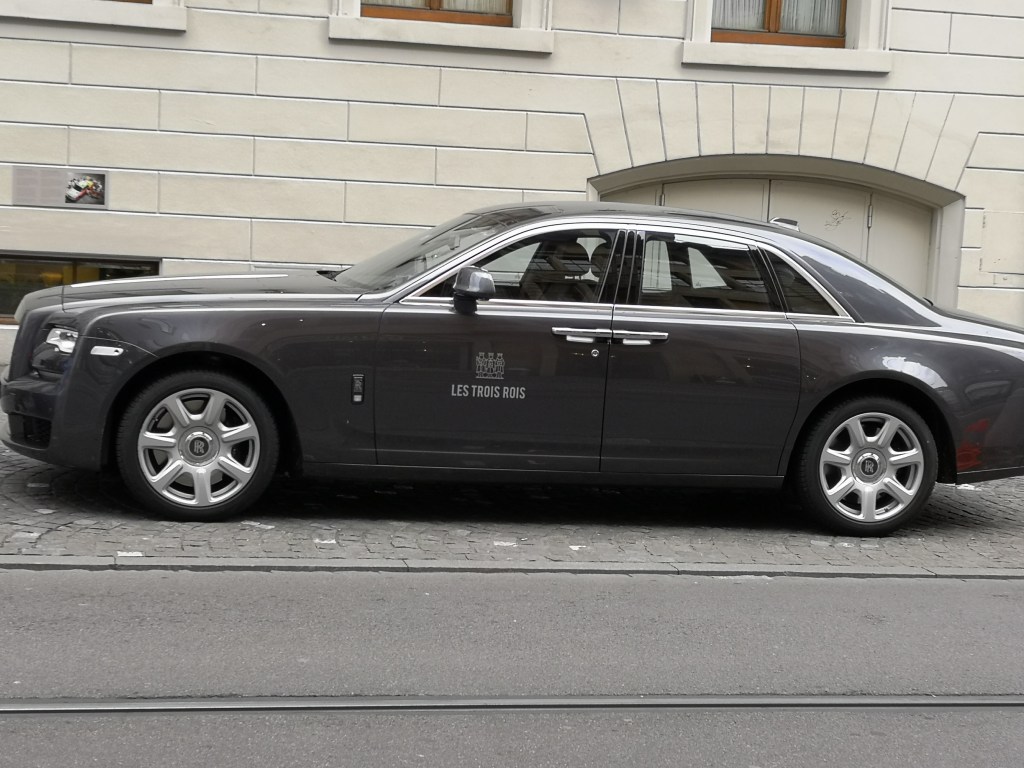
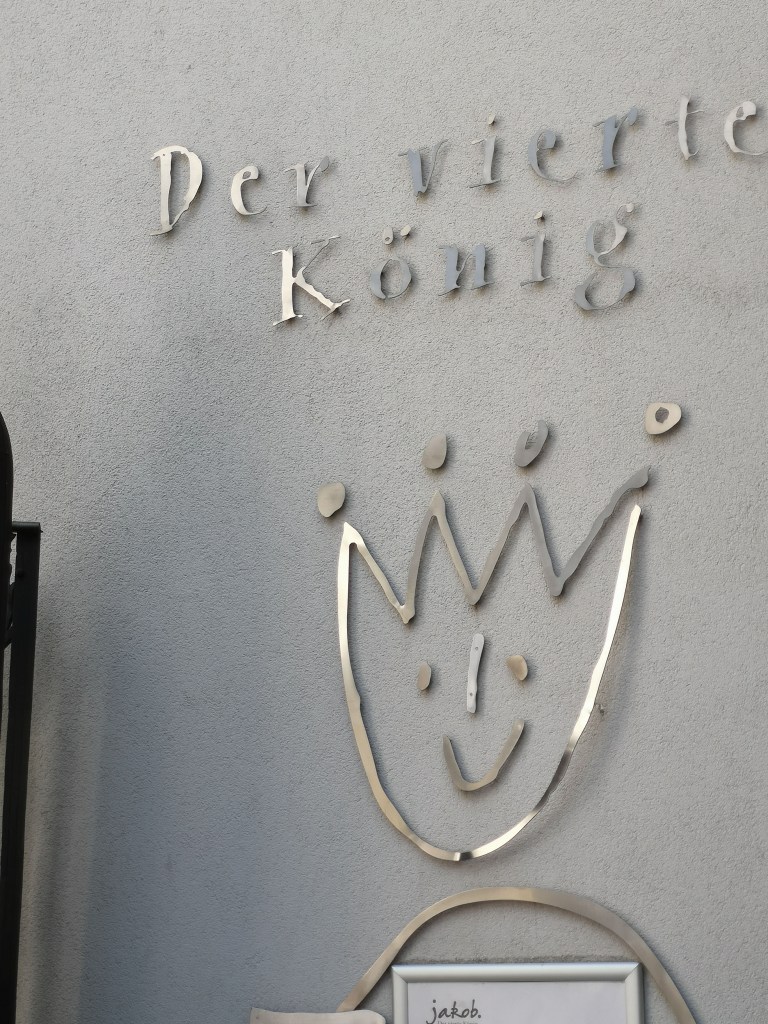
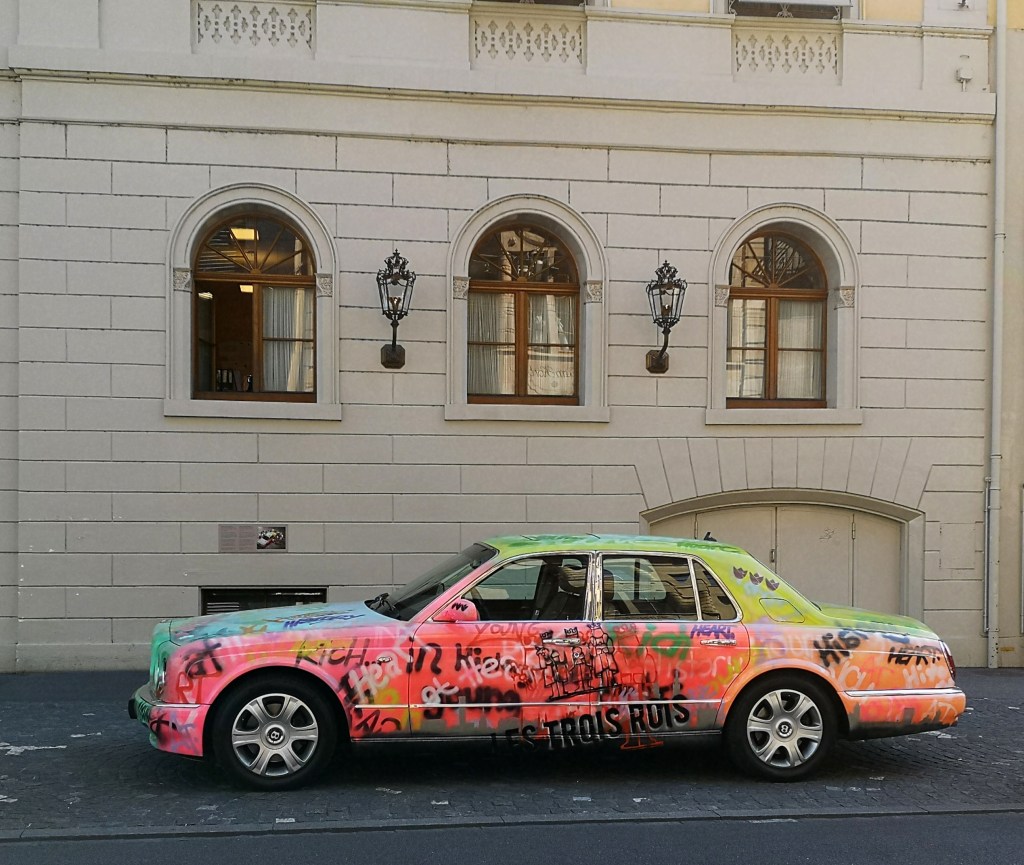
Ultimately, I must pose the question of whether there were truly only three kings. The Swiss often know more, and indeed, right next to the hotel ‚Die Drei Könige‘ (The Three Kings), there is the hotel ‚Der Vierte König‘ (The Fourth King). One might think that in Basel, not only kings but entire royal dynasties are honored! Perhaps the Fourth King is hiding in the narrow alleys, ready to attend to the next cake batter with his golden star in hand.
Basel, demanding and beautiful in every season, evidently has a royal inclination. Perhaps the city’s bakers have decided to confine royal splendor to the bakery and not flood the hotel landscape. Imagine guests in the lobby arguing for space among the royal dignitaries!
Already at the airport, the people of Basel are demanding. You must know where you want to go – to France or to Switzerland. One wrong step, and you find yourself in the wrong country. Similar is the case at the Strasbourg airport, where the border between Germany and France is just a step away. Basel-Mulhouse (F) adds the final touch to the whole affair because Strasbourg-Mühlhausen sounds just like Mulhouse, which is not too far away. Strasbourg is also always worth a visit.
Historically, Basel was not a royal city in the sense of a residence of a monarch or king. However, it was a significant city in the Holy Roman Empire and played a crucial role politically, economically, and culturally (and still does).
In the Middle Ages, Basel belonged to the Duchy of Swabia in the Holy Roman Empire and was an independent imperial city. This means that Basel was directly subject to the Emperor of the Holy Roman Empire and had no regional dukes or kings ruling over it. The city held a prominent position as a trading center and was an important hub for cultural and intellectual exchange, especially through the University of Basel, founded in 1460.
While Basel wasn’t a royal city, it still played a significant role in the history of the Holy Roman Empire and European culture. As an Austrian, I was particularly impressed by how Basel defended its independence against the influence of the Habsburgs, even though in Switzerland, the ancestral castle of the ruling dynasty stands. The ability of a city to assert itself in a time of political and religious turmoil against powerful dynasties speaks to a strong political and societal structure.
In this non-royal city on the Rhine, it could very well be that the kings discuss over a cozy coffee gathering at the ‚Dreikönigskuchen-Café‘ (Three Kings Cake Café) who among them is the true ruler of the cake. Perhaps the Third King is a hobby baker who has catapulted himself into the royal baking elite with his exceptional dough.
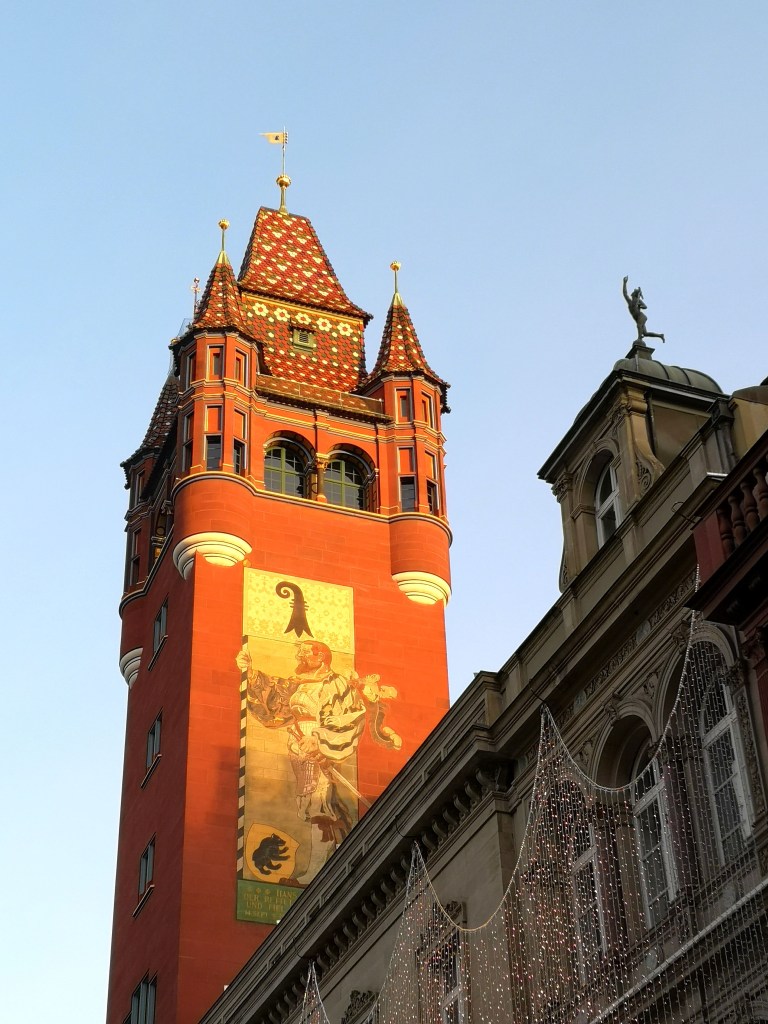
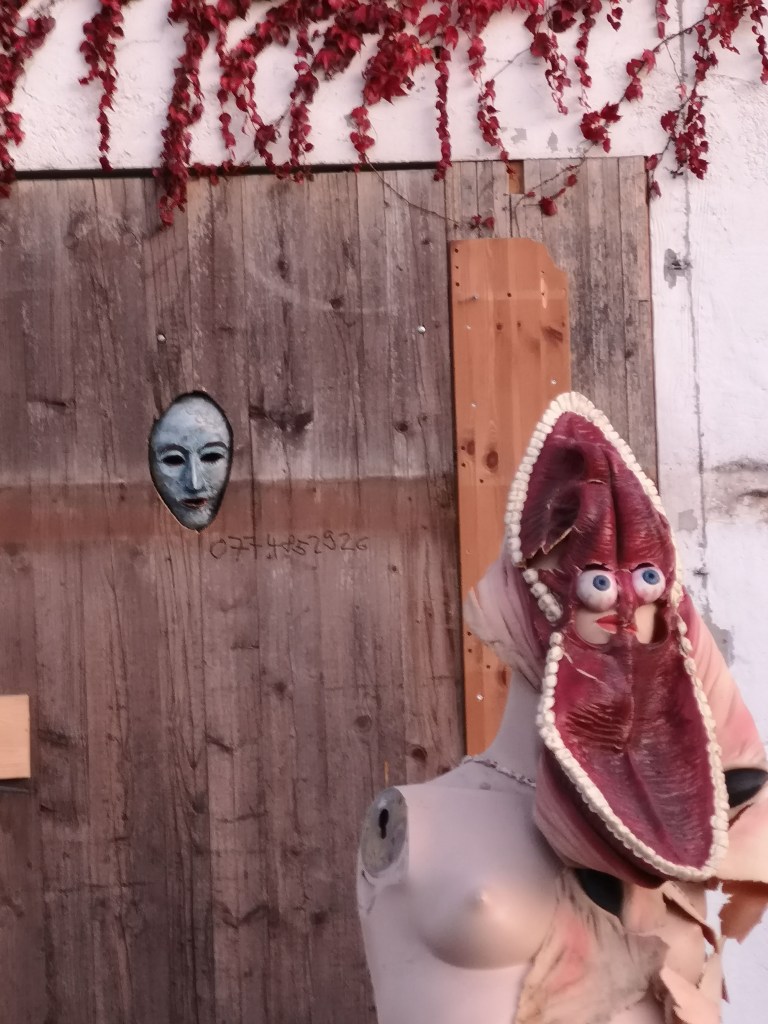
In short, it seems that the city has a penchant for royal abundance, be it in hotels or in the narrow alleys. May the Fourth King always lurk with a twinkle in the background, ready to provide a royal surprise! After Corona, however, Basel has lost some of its splendor; in general, it has a different feel now. Nevertheless, if I had to wrestle a fascinating and creative description, I would say Basel is big-city-small, panorama sofa, moment contact, coffee grounds conversations, in the midst, faces‘ rustle, impulse hearth, wildlife force, thought surfing culture, simultaneous whispers, and happiness space feeling.










Lastly, allow me to present you with some recipes:
Delicious galette recipes and a hearty soup.



 2025
2025 
Hinterlasse einen Kommentar